
BOOK X

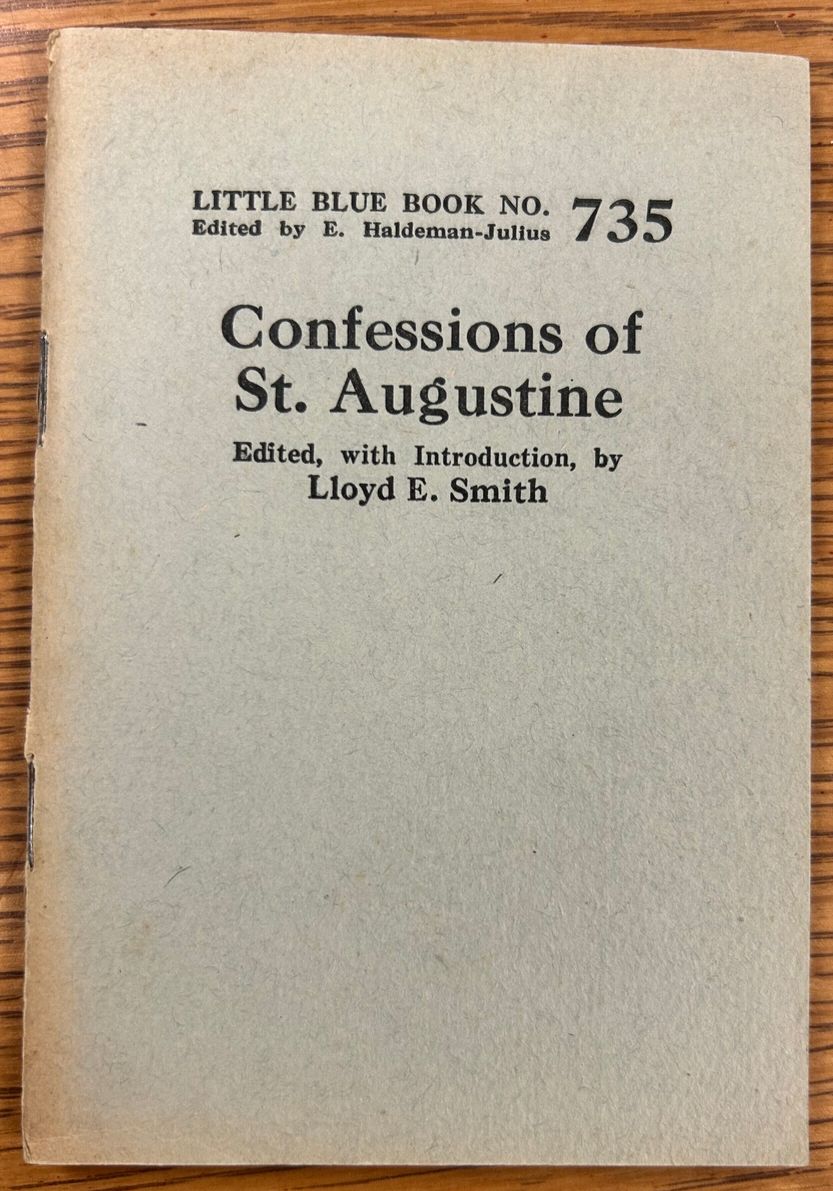
(“Having in the former books spoken of himself before his receiving the grace of Baptism, in this Augustine confesses what he then was. But first he inquires by what faculty we can know God at all, whence he enlarges on the mysterious character of the memory, wherein God, being made known, dwells, but which could not discover Him. Then he examines his own trials under the triple division of temptation, ‘lust of the flesh, lust of the eyes, and pride;’ what Christian continency prescribes as to each. On Christ, the Only Mediator, who heals and will heal all infirmities.” The sections on the nature of memory are the most interesting, and surprizing, too, in the light of modern psychology.)
( viii ) 12. I come to the fields and spacious palaces of my memory, where are the treasures of innumerable images, brought into it from things of all sorts perceived by the senses. There is stored up, whatsoever besides we think, either by enlarging or diminishing, or any other way varying those things which the sense hath come to; and whatever else hath been committed and laid up, which forgetfulness hath not yet swallowed up and buried. When I enter there, I require what I will to be brought forth, and something instantly comes; others must be longer sought after, which are fetched, as it were, out of some inner receptacle; others rush out in troops, and while one thing is desired and required, they start forth, as who should say, “Is it perchance I?” These I drive away with the hand of my heart from the face of my remembrance; until what I wished for be unveiled, and appear in sight, out of its secret place. Other things come up readily, in unbroken order, as they are called for; those in front making way for the following; and as they make way, they are hidden from sight, ready to come when I will. All which takes place, when I repeat a thing by heart.
-
There are all things preserved distinctly and under general heads, each having entered by its own avenue: as light, and all colors and forms of bodies, by the eyes; by the ears all sorts of sounds; all smells by the avenue of the nostrils; all tastes by the mouth; and by the sensation of the whole body, what is hard or soft; hot or cold; smooth or rugged; heavy or light; either outwardly or inwardly to the body. All these doth that great harbor of the memory receive in her numberless secret and inexpressible windings, to be forthcoming, and brought out at need; each entering in by his own gate, and there laid up. Nor yet do the things themselves enter in; only the images of the things perceived are there in readiness, for thought to recall. Which images, how they are formed, who can tell, though it doth plainly appear by which sense each hath been brought in and stored up? For even while I dwell in darkness and silence, in my memory I can produce colors, if I will, and discern betwixt black and white, and what others I will: nor yet do sounds break in, and disturb the image drawn in by my eyes, which I am reviewing, though they also are there, lying dormant, and laid up, as it were, apart. For these too I call for, and forthwith they appear. And though my tongue be still, and my throat mute, so can I sing as much as I will; nor do those images of colors, which notwithstanding be there, intrude themselves and interrupt, when another store is called for, which flowed in by the ears. So the other things, piled in and up by the other senses, I recall at my pleasure. Yea, I discern the breath of lilies from violets, though smelling nothing; and I prefer honey to sweet wine, smooth before rugged, at the time neither tasting, nor handling, but remembering only.
-
These things do I within, in that vast court of my memory. For there are present with me heaven, earth, sea, and whatever I could think on therein, besides what I have forgotten. There also meet I with myself, and recall myself, and when, where, and what I have done, and under what feelings. There be all which I remember, either on my own experience, or others’ credit. Out of the same store do I myself with the past continually combine fresh and fresh likenesses of things, which I have experienced, or, from what I have experienced, have believed: and thence again infer future actions, events and hopes, and all these again I reflect on, as present…. I speak to myself: and when I speak, the images of all I speak of are present, out of the same treasury of memory; nor would I speak of any thereof, were the images wanting.
-
Great is this force of memory, excessive great, O my God; a large and boundless chamber! who ever sounded the bottom thereof? yet is this a power of mine, and belongs unto my nature; nor do I myself comprehend all that I am. Therefore is the mind too strait to contain itself….
( ix ) 16. Here also is all learnt of the liberal sciences and as yet unforgotten; removed as it were to some inner place, which is yet no place: nor are they the images thereof, but the things themselves…. For some things are not transmitted into the memory, but their images only are with an admirable swiftness caught up, and stored as it were in wondrous cabinets, and thence wonderfully by the act of remembering brought forth.
( xii ) 19. The memory containeth also reasons and laws innumerable of numbers and dimensions, none of which hath any bodily sense impressed; seeing they have neither color, nor sound, nor taste, nor smell, nor touch….
( xiv ) 21. The same memory contains also the affections of my mind, not in the same manner that my mind itself contains them, when it feels them; but far otherwise, according to a power of its own. For without rejoicing I remember myself to have joyed; and without sorrow do I recollect my past sorrow. And that I once feared, I review without fear; and without desire call to mind a past desire. Sometimes, on the contrary, with joy do I remember my fore-past sorrow, and with sorrow, joy….
( xvi ) 24. What, when I name forgetfulness, and withal recognize what I name? whence should I recognize it, did I not remember it? I speak not of the sound of the name, but of the thing which it signifies: which if I had forgotten, I could not recognize what that sound signifies. When then I remember memory, memory itself is, through itself, present with itself: but when I remember forgetfulness, there are present both memory and forgetfulness; memory whereby I remember, forgetfulness which I remember. But what is forgetfulness, but the privation of memory? How then is it present that I remember it, since when present I cannot remember? But if what we remember we hold it in memory, yet, unless we did remember forgetfulness, we could never at the hearing of the name, recognize the thing thereby signified, then forgetfulness is retained by memory. Present then it is, that we forget not, and being so, we forget. It is to be understood from this, that forgetfulness, when we remember it, is not present to the memory by itself, but by its image: because if it were present by itself, it would not cause us to remember, but to forget. Who now shall search out this? who shall comprehend how it is?
-
Lord, I, truly, toil therein, yea and toil in myself; I am became a heavy soil requiring over much sweat of the brow . For we are not now searching out the regions of heaven, or measuring the distances of the stars, or inquiring the balancings of the earth. It is I myself who remember, I the mind. It is not so wonderful if what I myself am not, be far from me. But what is nearer to me than myself? And lo, the force of mine own memory is not understood by me; though I cannot so much as name myself without it. For what shall I say, when it is clear to me that I remember forgetfulness? Shall I say that that is not in my memory, which I remember? or shall I say that forgetfulness is for this purpose in my memory, that I might not forget? Both were most absurd. What third way is there? How can I say that the image of forgetfulness is retained by my memory, not forgetfulness itself, when I remember it? How could I say this either, seeing that when the image of anything is impressed on the memory, the thing itself must needs be first present, whence that image may be impressed? For thus do I remember Carthage, thus all places where I have been, thus men’s faces whom I have seen, and things reported by the other senses; thus the health or sickness of the body. For when these things were present, my memory received from them images, which, being present with me, I might look on and bring back in my mind when I remember them in their absence. If then this forgetfulness is retained in the memory through its image, not through itself, then plainly itself was once present, that its image might be taken. But when it was present, how did it write its image in the memory, seeing that forgetfulness by its presence effaces even what it finds already noted? And yet, in whatever way, although that way be past conceiving and explaining, yet certain am I that I remember forgetfulness itself also, whereby what we remember is effaced.
( xvii ) 26. … I will pass even beyond this power of mine which is called memory: yea, I will pass beyond it, that I may approach unto Thee, O sweet Light. What sayest Thou to me? See, I am mounting up through my mind towards Thee who abidest above me. Yea I will now pass beyond this power of mine which is called memory, desirous to arrive at Thee, whence Thou mayest be arrived at; and to cleave unto Thee, whence one may cleave unto Thee. For even beasts and birds have memory; else could they not return to their dens and nests, nor many other things they are used unto: nor indeed could they be used to anything, but by memory. I will pass then beyond memory, that I may arrive at Him who hath separated me from the four-footed beasts and made me wiser than the fowls of the air, I will pass beyond memory also, and where shall I find Thee, Thou truly good and certain sweetness? And where shall I find Thee?…
( xxiv ) 35. See what a space I have gone over in my memory seeking Thee, O Lord; and I have not found Thee without it. Nor have I found anything concerning Thee, but what I have kept in memory ever since I learnt Thee. For since I learnt Thee, I have not forgotten Thee. For where I found Truth, there found I my God, the Truth Itself; which since I learnt, I have not forgotten. Since then I learned Thee, Thou residest in my memory; and there do I find Thee, when I call Thee to remembrance, and delight in Thee. These be my holy delights, which Thou hast given me in Thy mercy, having regard to my poverty.
( xxv ) 36. But where in my memory residest Thou, O Lord, where residest Thou there? what manner of lodging hast Thou framed for Thee? what manner of sanctuary hast Thou builded for Thee? Thou hast given this honor to my memory, to reside in it; but in what quarter of it Thou residest, that am I considering. For in thinking on Thee, I passed beyond such parts of it as the beasts also have, for I found Thee not there among the images of corporeal things: and I came to those parts to which I committed the affections of my mind, nor found Thee there. And I entered into the very seat of my mind, (which it hath in my memory, inasmuch as the mind remembers itself also,) neither wert Thou there: for as Thou art not a corporeal image, nor the affection of a living being; (as when we rejoice, condole, desire, fear, remember, forget, or the like;) so neither art Thou the mind itself; because Thou art the Lord God of the mind; and all these are changed, but Thou remainest unchangeable over all, and yet hast vouchsafed to dwell in my memory, since I learnt Thee. And why seek I now, in what place whereof Thou dwellest, as if there were places therein? Sure I am, that in it Thou dwellest, since I have remembered Thee, ever since I learnt Thee, and there I find Thee, when I call Thee to remembrance.
( xxvi ) 37. Where then did I find Thee, that I might learn Thee? For in my memory Thou wert not, before I learned Thee. Where then did I find Thee, that I might learn Thee, but in Thee above me? Place there is none; we go backward and forward , and there is no place. Everywhere, O Truth, dost Thou give audience to all who ask counsel of Thee, and at once answerest all, though on manifold matters they ask Thy counsel. Clearly dost Thou answer, though all do not clearly hear. All consult Thee on what they will, though they hear not always what they will. He is thy best servant who looks not so much to hear that from Thee which himself willeth; as rather to will that which from Thee he heareth.
Looking for comments…
Searching Nostr relays. This may take a moment the first time this article is opened.
Looking for comments…
Searching Nostr relays. This may take a moment the first time this article is opened.