
BOOK IX

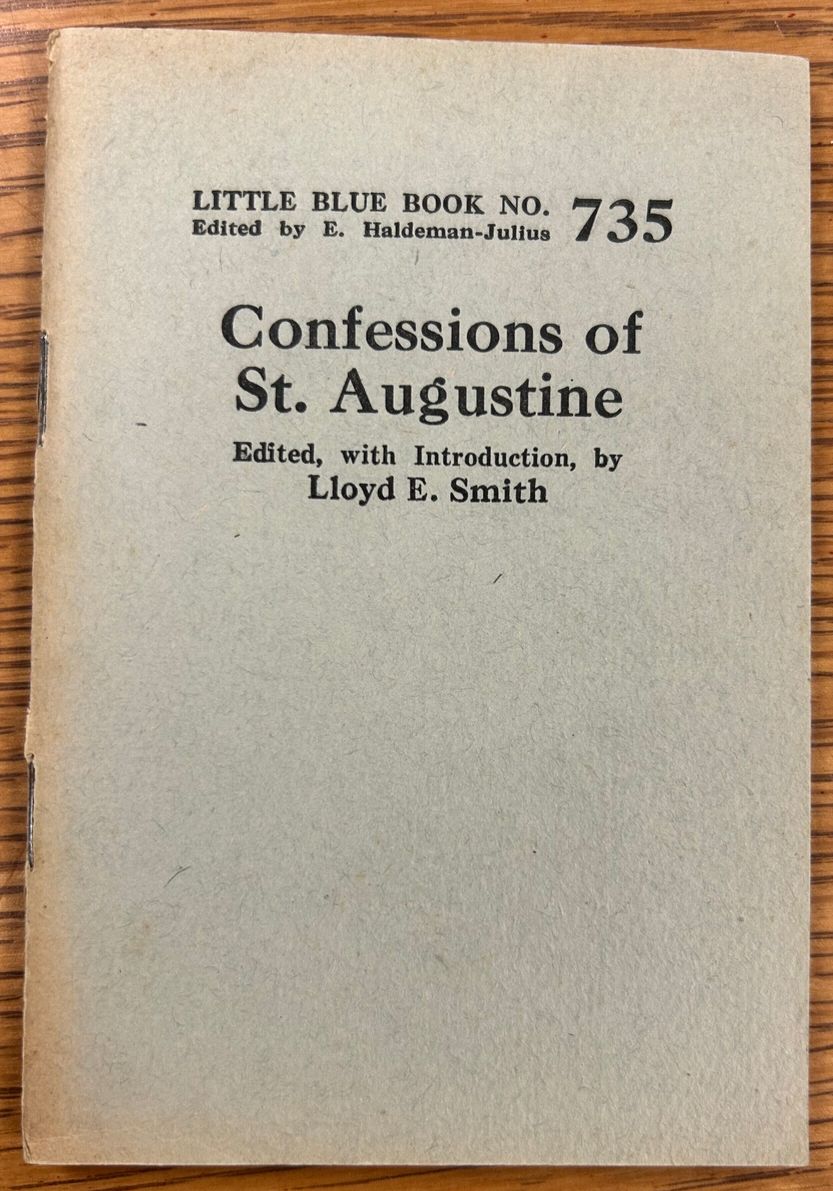
( i ) 1. O Lord, I am Thy servant; I am Thy servant, and the son of Thy handmaid: Thou hast broken my bonds in sunder. I will offer to Thee the sacrifice of praise. …
( v ) 13. The vintage-vacation ended, I gave notice to the Milanese to provide their scholars with another master to sell words to them; for that I had both made choice to serve Thee, and through my difficulty of breathing and pain in my chest, was not equal to the Professorship. And by letters I signified to Thy Prelate, the holy man Ambrose, my former errors and present desires, begging his advice what of Thy Scriptures I had best read, to become readier and fitter for receiving so great grace. He recommended Isaiah the Prophet: I believe, because he above the rest is a more clear foreshower of the Gospel and of the calling of the Gentiles. But I, not understanding the first lesson in him, and imagining the whole to be like it, laid it by, to be resumed when better practised in our Lord’s own words.
( vi ) 14. Thence, when the time was come, wherein I was to give in my name, [4] we left the country and returned to Milan…. and we were baptized, and anxiety for our past life vanished from us. Nor was I sated in those days with the wondrous sweetness of considering the depth of Thy counsels concerning the salvation of mankind. How did I weep, in Thy Hymns and Canticles, touched to the quick by the voices of Thy sweet-attuned Church! The voices flowed into mine ears, and the Truth distilled into my heart, whence the affections of my devotion overflowed, and tears ran down, and happy was I therein.
( viii ) 17. … We sought where we might serve Thee most usefully, and were returned to Africa: whitherward being as far as Ostia, my mother departed this life. Much I omit, as hastening much. Receive my confessions and thanksgivings, O my God, for innumerable things whereof I am silent. But I will not omit whatsoever my soul would bring forth concerning that Thy handmaid, who brought me forth, both in the flesh, that I might be born to this temporal light, and in heart, that I might be born to light eternal. Not her gifts, but Thine in her, would I speak of; for neither did she make nor educate herself. Thou createdst her; nor did her father and mother know what a one should come from them. And the scepter of Thy Christ, the discipline of Thine only Son, in a Christian house, a good member of Thy Church, educated her in Thy fear.
( ix ) 19. Brought up modestly and soberly, and made subject rather by Thee to her parents, than by her parents to Thee, so soon as she was of marriageable age, being bestowed upon a husband, she served him as her lord; and did her diligence to win him unto Thee, preaching Thee unto him by her conversation; by which Thou ornamentedst her, making her reverently amiable, and admirable unto her husband….
-
This great gift also Thou bestowedst, O my God, my mercy, upon that good handmaid of Thine, in whose womb Thou createdst me, that between any disagreeing and discordant parties where she was able, she showed herself such a peacemaker, that hearing on both sides most bitter things when the crudities of enmities are breathed out in sour discourses to a present friend against an absent enemy, she never would disclose aught of the one unto the other, but what might tend to their reconcilement. A small good this might appear to me, did I not to my grief know numberless persons who, through some horrible and widespreading contagion of sin, not only disclose to persons mutually angered things said in anger, but add withal things never spoken, whereas to humane humanity it ought to seem a light thing, not to foment or increase ill will by ill words, unless one study withal by good words to quench it. Such was she, Thyself, her most inward Instructor, teaching her in the school of the heart.
-
Finally, her own husband, towards the very end of his earthly life, did she gain unto Thee; nor had she to complain of that in him as a believer, which before he was a believer she had borne from him…. For she had been the wife of one man , had requited her parents, had governed her house piously, was well reported of for good works, had brought up children , so often travailing in birth of them , as she saw them swerving from Thee. Lastly, of all of us Thy servants, O Lord, (whom on occasion of Thy own gift Thou sufferest to speak,) us, who before her sleeping in Thee lived united together, having received the grace of Thy baptism, did she so take care of, as though she had been mother of us all; so served us, as though she had been child to us all.
( x ) 23. The day now approaching whereon she was to depart this life, (which day Thou well knewest, we knew not,) it came to pass, Thyself, as I believe, by Thy secret ways so ordering it, that she and I stood alone; leaning in a certain window, which looked into the garden of the house where we now lay, at Ostia; where removed from the din of men, we were recruiting from the fatigues of a long journey, for the voyage. We were discoursing then together, alone, very sweetly; and forgetting those things which are behind, and reaching forth unto those things which are before , we were inquiring between ourselves in the presence of the Truth, which Thou art, of what sort the eternal life of the saints was to be, which eye hath not seen, nor ear heard, nor hath it entered into the heart of man . But yet we gasped with the mouth of our heart, after those heavenly streams of Thy fountain, the fountain of life , which is with Thee ; that being bedewed thence according to our capacity, we might in some sort meditate upon so high a mystery.
-
And when our discourse was brought to that point, that the very highest delight of the earthly senses, in the very purest material light, was, in respect of the sweetness of that life, not only not worthy of comparison, but not even of mention; we raising up ourselves with a more glowing affection towards the “Self-same,” did by degrees pass through all things bodily, even the very heaven, when sun and moon, and stars shine upon the earth; yea, we were soaring higher yet, by inward musing, and discourse, and admiring of Thy works; and we came to our own minds, and went beyond them, that we might arrive at that region of never-failing plenty, where Thou feedest Israel forever with the food of truth, and where life is the Wisdom by whom all these things are made , and what have been, and what shall be, and she is not made, but is, as she hath been, and so shall she be ever; yea rather, to “have been,” and “hereafter to be,” are not in her, but only “to be,” seeing she is eternal. For to “have been,” and “to be hereafter,” are not eternal. And while we were discoursing and panting after her, we slightly touched on her with the whole effort of our heart; and we sighed, and there we leave bound the first fruits of the Spirit ; and returned to vocal expressions of our mouth, where the word spoken was beginning and end. And what is like unto Thy Word, our Lord, who endureth in Himself without becoming old, and maketh all things new ?
-
We were saying then: If to any the tumult of the flesh were hushed, hushed the images of earth, and waters, and air, hushed also the poles of heaven, yea the very soul be hushed to herself, and by not thinking on self surmount self, hushed all dreams and imaginary revelations, every tongue and every sign, and whatsoever exists only in transition, since if any could hear, all these say, We made not ourselves, but He made us that abideth forever —If then having uttered this, they too should be hushed, having roused only our ears to Him who made them, and He alone speak, not by them, but by Himself, that we may hear His Word, not through any tongue of flesh, nor Angel’s voice, nor sound of thunder, nor in the dark riddle of similitude, but, might hear Whom in these things we love, might hear His Very Self without these, (as we two now strained ourselves, and in swift thought touched on that Eternal Wisdom, which abideth over all;)—could this be continued on; and other visions of kind far unlike be withdrawn, and this one ravish, and absorb, and wrap up its beholder amid these inward joys, so that life might be forever like that one moment of understanding which now we sighed after; were not this, Enter into thy Master’s joy ? And when shall that be? When we shall all rise again , though we shall not all be changed ?
-
Such things was I speaking, and even if not in this very manner, and these same words, yet, Lord, Thou knowest, that in that day when we were speaking of these things, and this world with all its delights became, as we spake, contemptible to us, my mother said, “Son, for mine own part I have no further delight in anything in this life. What I do here any longer, and to what end I am here, I know not, now that my hopes in this world are accomplished. One thing there was for which I desired to linger for a while in this life, that I might see thee a Catholic Christian before I died. My God hath done this for me more abundantly, that I should now see thee withal, despising earthly happiness, become His servant: what do I here?”
( xi ) 27. What answer I made her unto these things, I remember not. For scarce five days after, or not much more, she fell sick of a fever; and in that sickness one day she fell into a swoon, and was for a while withdrawn from these visible things. We hastened round her; but she was soon brought back to her senses; and looking on me and my brother standing by her, said to us inquiringly, “Where was I?” And then looking fixedly on us, with grief amazed; “Here,” saith she, “shall you bury your mother.” I held my peace and refrained weeping; but my brother spake something, wishing for her, as the happier lot, that she might die, not in a strange place, but in her own land. Whereat, she with anxious look, checking him with her eyes, for that he still savored such things , and then looking upon me; “Behold,” saith she, “what he saith:” and soon after to us both, “Lay,” she saith, “this body anywhere; let not the care for that any way disquiet you: this only I request, that you would remember me at the Lord’s altar, wherever you be.” And having delivered this sentiment in what words she could, she held her peace, being exercised by her growing sickness.
-
But I, considering Thy gifts, Thou unseen God, which Thou instillest into the hearts of Thy faithful ones, whence wondrous fruits do spring, did rejoice and give thanks to Thee, recalling what I before knew, how careful and anxious she had ever been, as to her place of burial, which she had provided and prepared for herself by the body of her husband. For because they had lived in great harmony together, she also wished (so little can the human mind embrace things divine) to have this addition to that happiness, and to have it remembered among men, that after her pilgrimage beyond the seas, what was earthly of this united pair had been permitted to be united beneath the same earth. But when this emptiness had through the fullness of Thy goodness begun to cease in her heart, I knew not, and rejoiced admiring what she had so disclosed to me; though indeed in that our discourse also in the window, when she said, “What do I here any longer?” there appeared no desire of dying in her own country. I heard afterwards also, that when we were now at Ostia, she with a mother’s confidence, when I was absent, one day discoursed with certain of my friends about the contempt of this life, and the blessing of death: and when they were amazed at such courage which Thou hadst given to a woman, and asked, “Whether she were not afraid to leave her body so far from her own city?” she replied, “Nothing is far to God; nor was it to be feared lest at the end of the world, He should not recognize whence He were to raise me up.” On the ninth day then of her sickness, and the fifty-sixth year of her age, and the three and thirtieth of mine, was that religious and holy soul freed from the body.
( xii ) 29. I closed her eyes; and there flowed withal a mighty sorrow into my heart; which was overflowing into tears; mine eyes at the same time, by the violent command of my mind, drank up their fountain wholly dry; and woe was me in such a strife! But when she breathed her last, a boy burst out into a loud lament; then, checked by us all, held his peace. In like manner also a childish feeling in me, which was, through my heart’s youthful voice, finding its vent in weeping, was checked and silenced. For we thought it not fitting to solemnize that funeral with tearful lament, and groanings: for thereby do they for the most part express grief for the departed, as though unhappy, or altogether dead; whereas she was neither unhappy in her death, nor altogether dead. Of this we were assured on good grounds, the testimony of her good conversation and her faith unfeigned .
-
What then was it which did grievously pain me within, but a fresh wound wrought through the sudden wrench of that most sweet and dear custom of living together? I joyed indeed in her testimony, when, in that her last sickness, mingling her endearments with my acts of duty, she called me “dutiful,” and mentioned, with great affection of love, that she never had heard any harsh or reproachful sound uttered by my mouth against her. But yet, O my God, Who madest us, what comparison is there betwixt that honor that I paid to her, and her slavery for me? Being then forsaken of so great comfort in her, my soul was wounded, and that life rent asunder as it were, which, of hers and mine together, had been made but one.
-
The boy then being stifled from weeping, Euodius took up the Psalter, and began to sing, our whole house answering him, the Psalm, I will sing of mercy and judgment to Thee, O Lord . But hearing what we were doing, many brethren and religious women came together; and whilst they (whose office it was) made ready for the burial, as the manner is, I (in a part of the house where I might properly), together with those who thought not fit to leave me, discoursed upon something fitting the time; and by this balm of truth assuaged that torment, known to Thee, they unknowing and listening intently, and conceiving me to be without all sense of sorrow. But in Thy ears, where none of them heard, I blamed the weakness of my feelings, and refrained my flood of grief, which gave way a little unto me; but again came, as with a tide, yet not so as to burst out into tears, nor to a change of countenance; still I knew what I was keeping down in my heart. And being very much displeased that these human things had such power over me, which in the due order and appointment of our natural condition must needs come to pass, with a new grief I grieved for my grief, and was thus worn by a double sorrow.
-
And behold, the corpse was carried to the burial; we went and returned without tears. For neither in those prayers which we poured forth unto Thee, when the sacrifice of our ransom was offered for her, when now the corpse was by the grave’s side, as the manner there is, previous to its being laid therein, did I weep even during those prayers; yet was I the whole day in secret heavily sad, and with troubled mind prayed Thee, as I could, to heal my sorrow, yet Thou didst not; impressing, I believe, upon my memory by this one instance, how strong is the bond of all habit, even upon a soul which now feeds upon no deceiving Word. It seemed also good to me to go and bathe, having heard that the bath had its name from the Greek word implying a driving of sadness from the mind. And this also I confess unto Thy mercy, Father of the fatherless , that I bathe, and was the same as before I bathed. For the bitterness of sorrow could not exude out of my heart. Then I slept, and woke up again, and found my grief not a little softened; and as I was alone in my bed, I remembered those true verses of Thy Ambrose. For Thou art the
-
And then by little and little I recovered my former thoughts of Thy handmaid, her holy conversation towards Thee, her holy tenderness and observance toward us, whereof I was suddenly deprived: and I was minded to weep in Thy sight, for her and for myself, in her behalf and in my own. And I gave way to the tears which I before restrained, to overflow as much as they desired; reposing my heart upon them; and it found rest in them, for it was in Thy ears, not in those of man, who would have scornfully interpreted my weeping. And now, Lord, in writing I confess it unto Thee. Read it, who will, and interpret it, how he will: and if he finds sin therein, that I wept my mother for a small portion of an hour, (the mother who for the time was dead to mine eyes, who had for many years wept for me, that I might live in Thine eyes,) let him not deride me; but rather, if he be one of large charity, let him weep himself for my sins unto Thee, the Father of all the brethren of Thy Christ.
( xiii ) 37. May she rest then in peace with the husband, before and after whom she had never any; whom she obeyed, with patience bringing forth fruit unto Thee, that she might win him also unto Thee. And inspire, O Lord my God, inspire Thy servants my brethren, Thy sons my masters, whom with voice, and heart, and pen I serve, that so many as shall read these Confessions may at Thy Altar remember Monnica Thy handmaid, with Patricius, her sometimes husband, by whose bodies Thou broughtest me into this life, how, I know not. May they with devout affection remember my parents in this transitory light, my brethren under Thee our Father in our Catholic Mother, and my fellow citizens in that eternal Jerusalem, which Thy pilgrim people sigheth after from their Exodus, even unto their return thither. That so my mother’s last request of me may, through my confessions, more than through my prayers, be, through the prayers of many, more abundantly fulfilled to her.
Looking for comments…
Searching Nostr relays. This may take a moment the first time this article is opened.
Looking for comments…
Searching Nostr relays. This may take a moment the first time this article is opened.